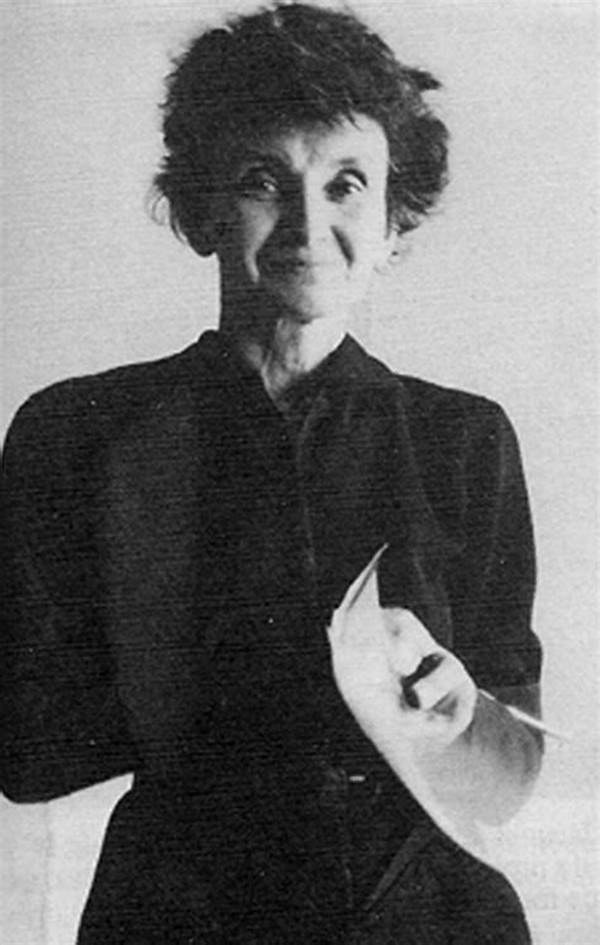
Marie Epstein (born Marie-Antonine Epstein; 14 August 1899, Warsaw - 24 April 1995, Paris) was an actress, scenarist, film director, and film preservationist. Her career is distinguished by three important collaborations. Throughout the 1920s, she acted in and wrote scenarios for films directed by her brother, Jean Epstein. From the 1920s through the early 1950s, she collaborated with the director Jean Benoît-Lévy on sixteen films, serving variously as a writer, assistant director, and co-director. From the early 1950s to her retirement in 1977, Epstein served as a film preservationist at the Cinémathèque française.
Collaboration with Jean Benoît-Lévy (1928-1940) Edit
Epstein is best known for the films she co-directed with Jean Benoît-Lévy throughout the 1930s. Moving away from the romantic scenarios she wrote for Jean Epstein, her films with Benoît-Lévy employ many of the avant-garde techniques developed in French Impressionist Cinema of the 1920s to explore major social issues facing France in the 1930s, especially poverty, single motherhood, the struggles of oppressed women, and the plight of poor and neglected children. As film historian Alan Williams notes, Benoît-Lévy and Epstein's films "always pay careful attention to the moral choices required by particular social conditions." [1]
While their films reflect the Poetic Realism prominent in 1930s French cinema, their work makes greater use of experimental editing techniques. Describing La Maternelle (1933), a film about state-run nursery education, Williams notes that the film recalls "the tradition of cinematic impressionism" by using "subjective editing" to convey "traumatic events in the life of a neglected slum child" and by presenting a woman's "attempted suicide in a rapid sequence of disparate images" to communicate the episode's violence.[1] Film scholar Sandy Flitterman-Lewis also calls attention to this episode because the woman looks directly at the camera (a rarity in films of this period), "imp
声明:看片狂人所有影视资源均由机器人从互联网采集而来,相关链接已注明来源。看片狂人一切电影视频资源仅用于测试和学习交流,一切版权归原创者所有。站长邮箱[email protected]
© 2026 www.kpkuang.one Theme by vfed 3.1.47
2026.4.30
推荐入口:传送门1 / 传送门2 / 传送门3
可用域名:域名1 / 域名2 / 域名3
1:>>地址发布页1<<建议收藏;
2:>>地址发布页2<<建议收藏;
3:>>地址发布页3<<建议收藏;
4:>>地址发布页4<<建议收藏;
5:发邮件给[email protected],会自动回复包含最新地址信息的邮件;
设置安全dns能有效防止域名被屏蔽:Chrome设置教程 Edge设置教程 火狐设置教程